
An impact crater, also known as meteorite crater
is a crater created by a collision of a meteorite with the Earth
surface. The following is a list of 10 impressive impact craters that
can be seen and recognized by the naked eye. Therefore, the list
contains small craters, rather than huge crates which are tens or
hundreds of kilometers in diameter
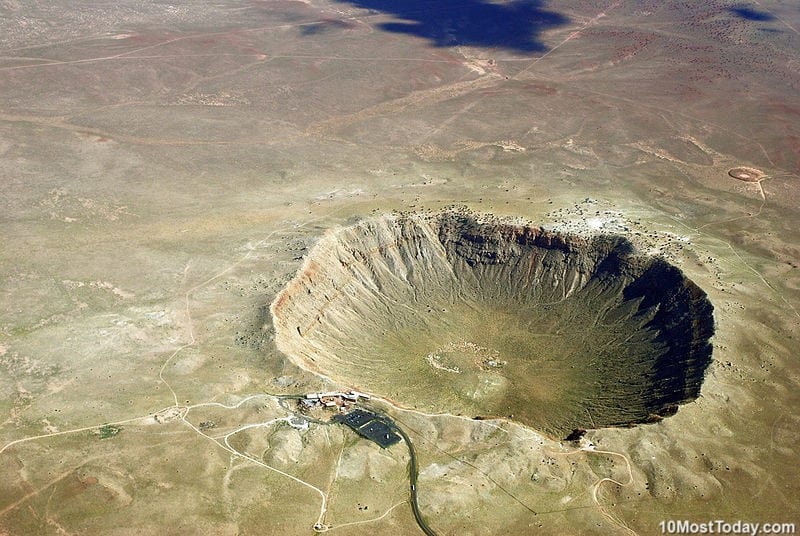
1. Meteor Crater (Barringer crater), Arizona, United States – The Barringer crater is one of the best preserved impact craters
in the world. The impact occurred about 50,000 years ago by an iron
meteorite – very recent with regards to meteorite impacts. It has a
diameter of 1,200 meters (3,900 ft) and a depth of 170 m deep (570 ft).
The crater is named after Daniel Barringer who was first to suggest that
it was produced by meteorite impact. The Meteor crater is a U.S.
National Natural Landmark and resides on a privately owned property
2. Pingualuit Crater, Quebec, Canada –
The Pingualuit crater, also known as Chubb Crater or New Quebec
Crater is located in the Ungava Peninsula. It is 3.44 km (2.14 mi) in
diameter, and has a depth of 400 m (1,300 ft). The impact occurred
around 1.4 million years ago – older than Meteor Crater, but still young
for an impact crater. The crater is filled with a lake called Pingualuk
Lake
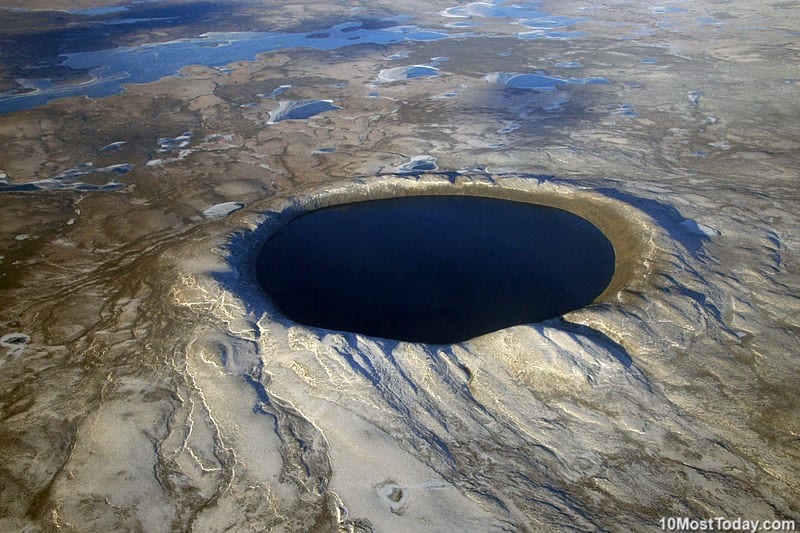
10 Most Incredible Impact Craters: Pingualuit Crater
3. Amguid Crater, Algeria – The Amguid crater is an impact crater with a diameter of about 500 – 530 meters (1,640 – 1,740 ft) and a depth of only 65 meters
(213 ft). The crater was first descovered in 1948 and it is estimated
that the impact occurred less than 100,000 years ago
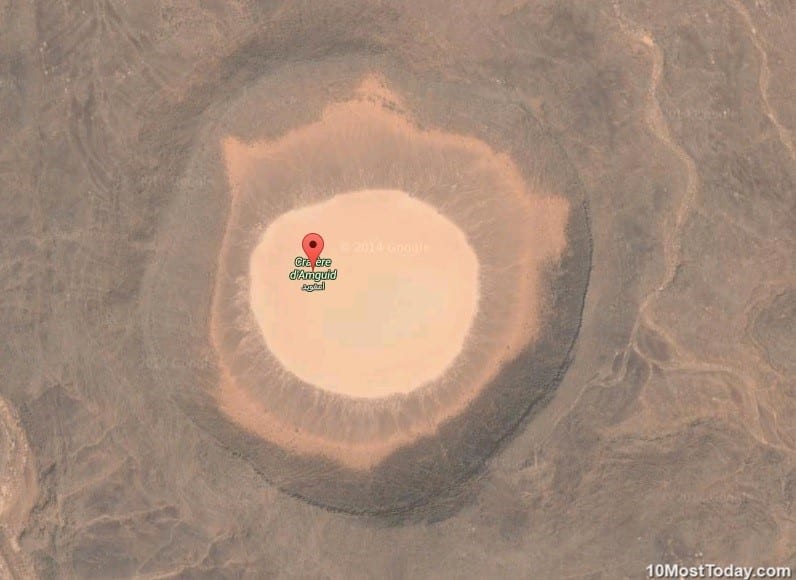
10 Most Incredible Impact Craters: Amguid Crater (source: Google Maps)
Continue Below
4. Lonar Crater, Maharashtra, India – The Lonar Crater
age is somewhat controversial: the age is usually estimated to be around
52,000 years, but recent studies indicate that the impact might have
occurred as much as 570,000 years ago (give or take 47,000). The meteor
crater rim is about 1.8 km (5,900 ft) in diameter and is filled by the
Lonar Lake which has a diameter of 1.2 km (3,900 ft)
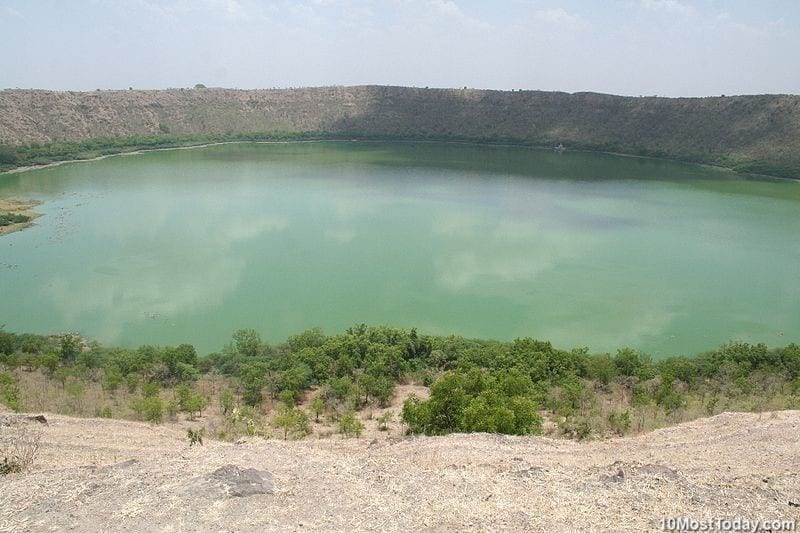
10 Most Incredible Impact Craters: Lonar Crater
5. Wolfe Creek Crater, Western Australia, Australia – Located within Wolfe Creek Meteorite Crater National Park, this well preserved meteorite crater was first found in 1947. It is about 875 meters (2,870 ft) in diameter and has a depth of about is 60 meters (196 ft). The age estimation is less than 300,000 years

10 Most Incredible Impact Craters: Wolfe Creek Crater

6. Tenoumer crater, Mauritania – Located in
the western Sahara Desert, this impact crater is 1.9 km in diameter,
with edges that rise up to 110 meters above the crater’s base. It is one
of the youngest of the craters in this list with an estimated age of
somewhere between 10,000 – 30,000 years

10 Most Incredible Impact Craters: Tenoumer Crater (source: Google Maps)
7. Tswaing Crater, South Africa – This crater is also filled with a lake. The crater has a diameter of 1.13 km and a depth of 100 meters. The impact occurred some 220,000 years ago
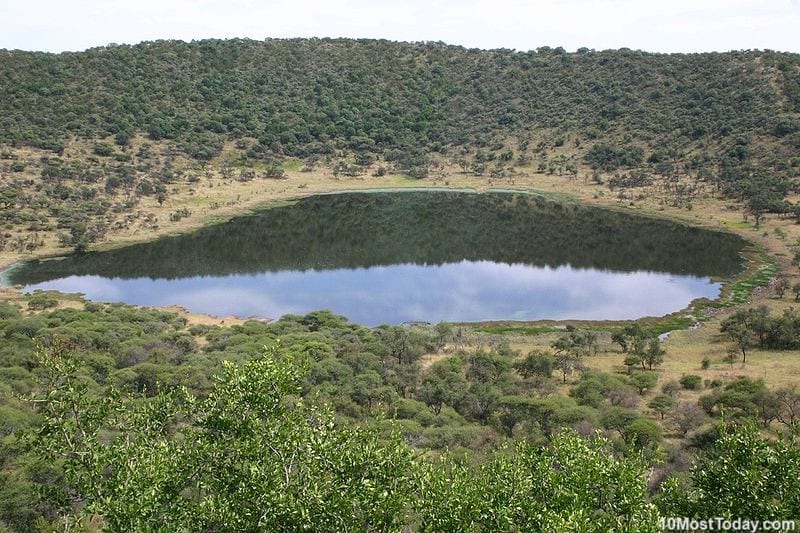
10 Most Incredible Impact Craters: Tswaing Crater
8. Kaali Craters, Saaremaa island, Estonia – Kaali is a group of 9 impact craters formed 4,000 -7,600 years ago, as a meteorite broke into pieces at an altitude 5 – 10 km and fell to the surface in fragments. The falling fragments created 9 rather small craters all within a radius of 1 km (0.6 mile). The largest crater has a diameter of 110 meters (360 ft) and a depth of 22 meters (72 ft), while the rest are only 12-40 meters in diameter and just 1-4 meters in depth
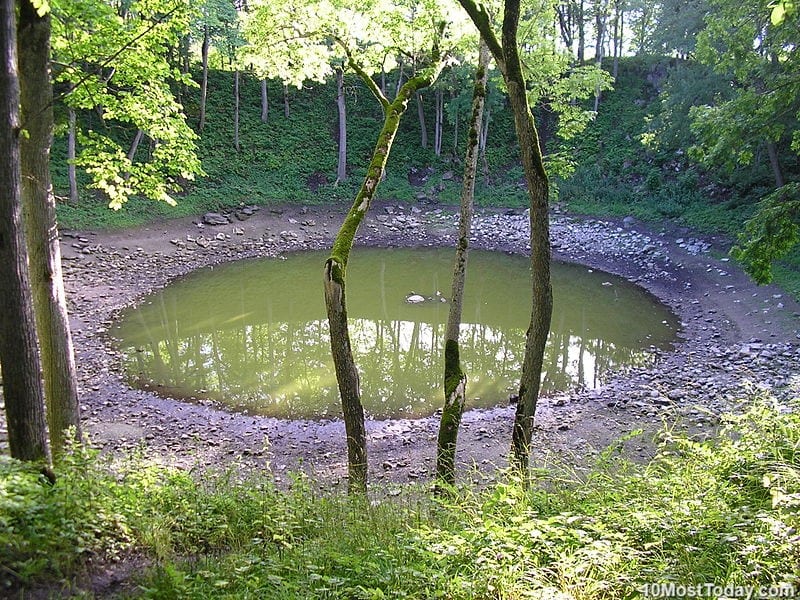
10 Most Incredible Impact Craters: Kaali Craters
9. Aouelloul Crater, Mauritania – Another exposed impact crater in Mauritania, 390 meters wide with an age estimation of over 3 million years
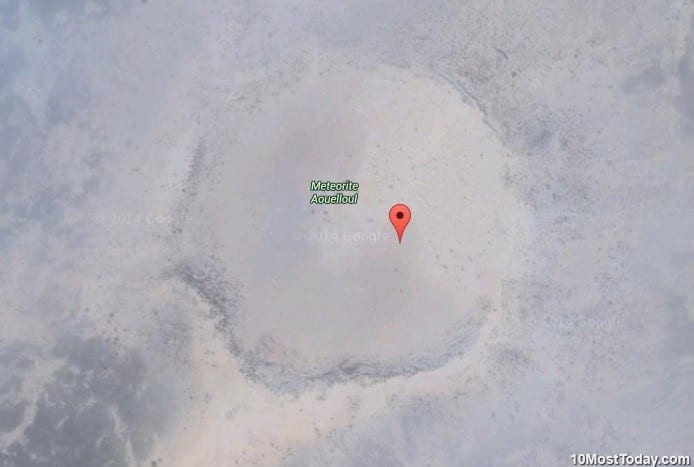
10 Most Incredible Impact Craters: Aouelloul Crater (source: Google Maps)
10. Roter Kamm Crater, Namibia – Located in the Namib Desert, the crater is 2.5 km (1.5 miles) in diameter and is 130 meters (430 ft) deep, although most of it (at least 100 meters / 330 ft) is filled with sand. The age estimation is 4-5 million years
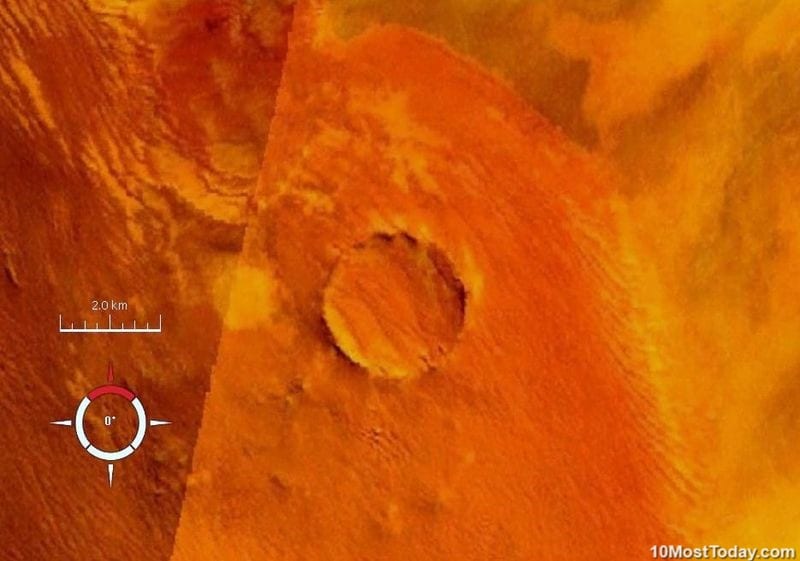
10 Most Incredible Impact Craters: Roter Kamm Crater
